
Teamwork is what makes a team effective and efficient. The way individual performances come together directly affects the whole. In essence, teamwork is synergy. Or making the whole greater than the sum of its parts. More than anything, what holds this synergy together is trust. In fact, team trust is what makes team work happen. Without trust, you do not have a team. Rather, you have a misaligned group of people.

Posts Tagged Under: collaboration
Executive communications are leadership informational exchange. It’s what happens when key people from the executive team have something to say. A key person may be the CEO, or any departmental head or a representative. Which means that executive communications are very important.
After all, when an executive team member has something to say, people pay attention. And departmental teams also pay a lot of attention. Also, whoever does not pay attention, stands to lose. From employees to investment bankers, everyone has an eye on executive communications.


Remote work may have been on the rise for the past years, but most people still prefer to do their job in the office. At least that’s what a recent report released by BambooHR says. More precisely, “in 2016, 79% of employees felt they accomplished their best work at the office, yet only 27% favored it.”
Meanwhile, we are witnessing a (r)evolution of the workspace. To fuel idea generation inside the office, an ever growing number of businesses that rely on the intellectual output of their employees are focusing on reshaping the concept. And they seem to have found a means in workplace architecture.

Photo by Victor Garcia on Unsplash

There’s no question that our culture values work, and even more so, success at work. Most of us spend an average of 40+ hours at the office every week, and for a lot of employees, those hours are anything but enjoyable.
According to a recent study

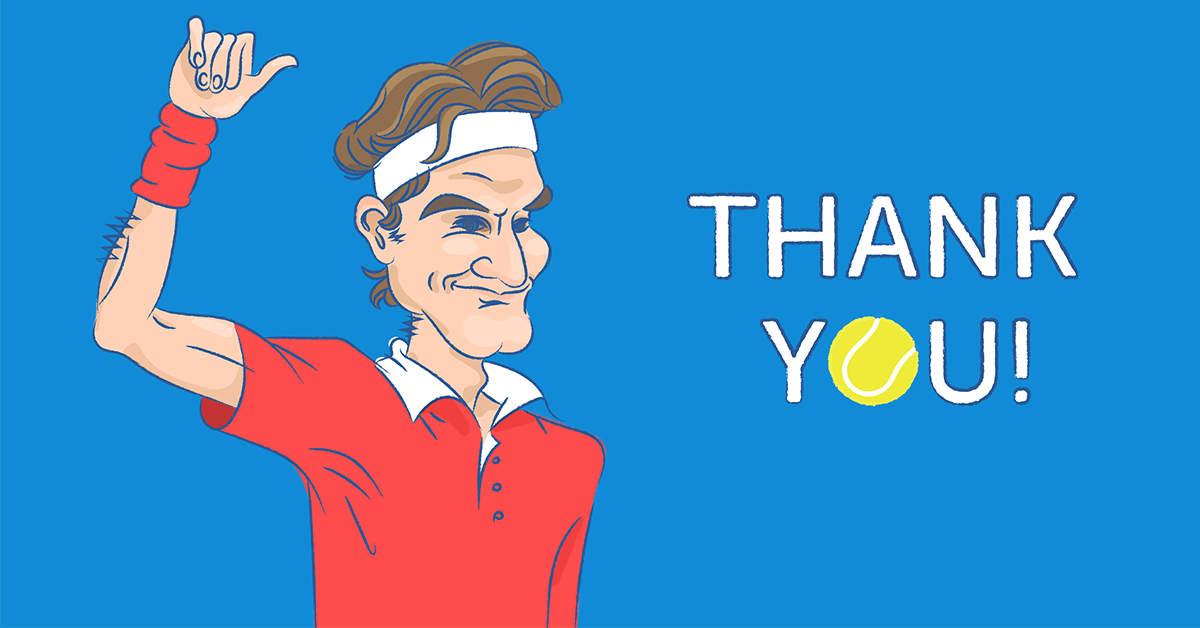
I’ve been watching Roger Federer’s performance over the years with great admiration. While he did so much for tennis, I think that his greatest influence expands outside the court.

We live in fast-paced digital world where change happens at the blink of an eye. The people who will lead us tomorrow are the ones learning how to cope with change today. They do that not only by embracing change, but by continuously learning new things and keeping up to date with their industry’s latest technology and best practices.
Today’s leaders from organizations like yours and ours have to answer a critical question: how to create a work environment that provides the space, dialogue and discipline to grow? We all need to find the way to make our teams get away from the daily grind of what needs to get done, and find the time for learning.

Photo by Clay Banks on Unsplash
Every work day finds us focusing on our projects, striving to meet deadlines and finish tasks before we leave the office. But that’s not all we do, is it? We also spend a lot of time helping teammates who need our advice and input. Most often, we’re eager to help. But at the end of the day, when we realize we didn’t meet that deadline or we’re not even half way through that critical task, we have mixed feelings. Helping teammates felt good, but it took too much of our time and energy, and we neglected our work.
So, what motivates us to jump in and help, and how can we do it while staying productive?

Photo by Rémi Walle on Unsplash

A couple of years ago, I was dealing with a very common parenting dilemma. How can I help my 7-year-old son enjoy reading?

Here at Hubgets we’re really fond of our Team board. We think of it as our daily roller coaster or water cooler. It’s where we share everything and anything that concerns us as a team – both serious and fun stuff, news, updates, photos, videos, and web content. Now you can understand why we couldn’t leave our “daily playground” out of our latest improvement plan. In this article, we’ll tell you how we made the Team board sleeker and better.

Studies have shown that breaks are highly important for your overall productivity at work and for your focus


