
From the first telephone exchanges to VoIP, cloud telephony, and today’s AI-powered services, business communications have continuously evolved toward bringing people closer together. This time, we’re looking at what Unified Communications is.
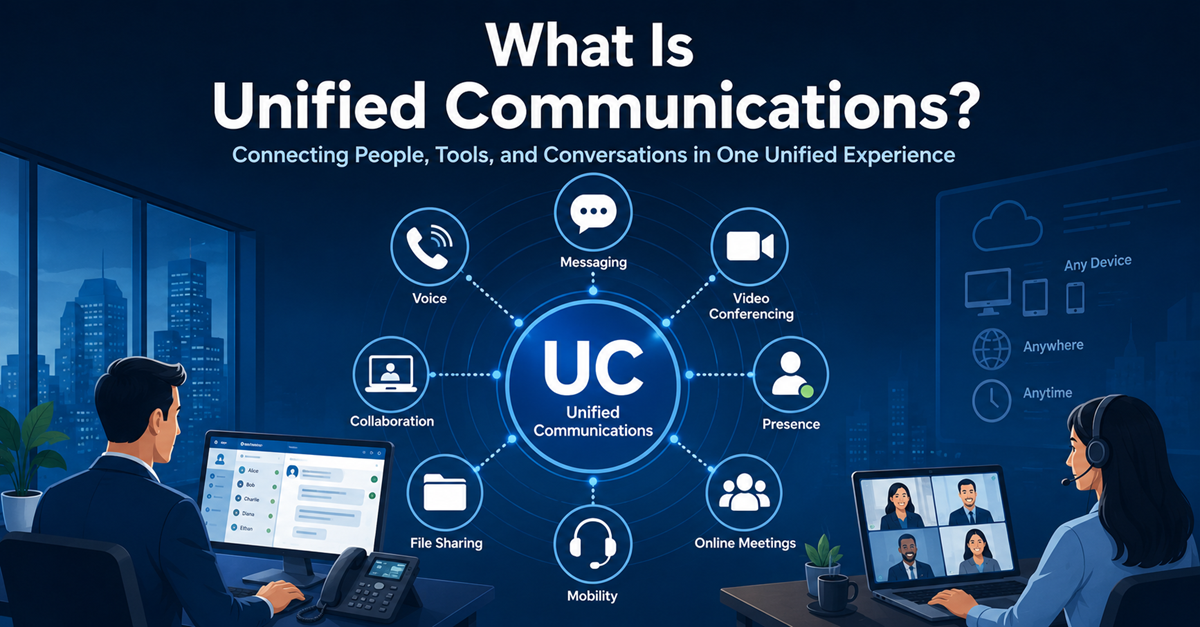
From the first telephone exchanges to VoIP, cloud telephony, and today’s AI-powered services, business communications have continuously evolved toward bringing people closer together. This time, we’re looking at what Unified Communications is.
Before AI-powered phone agents, cloud contact centers, and Unified Communications began transforming the telecommunications industry, one technology fundamentally changed how people made phone calls: Voice over Internet Protocol. In the previous article, we explored PSTN, the traditional telephone network that connected the world for more than a century. The next logical step in our series is answering another essential question: What is VoIP?
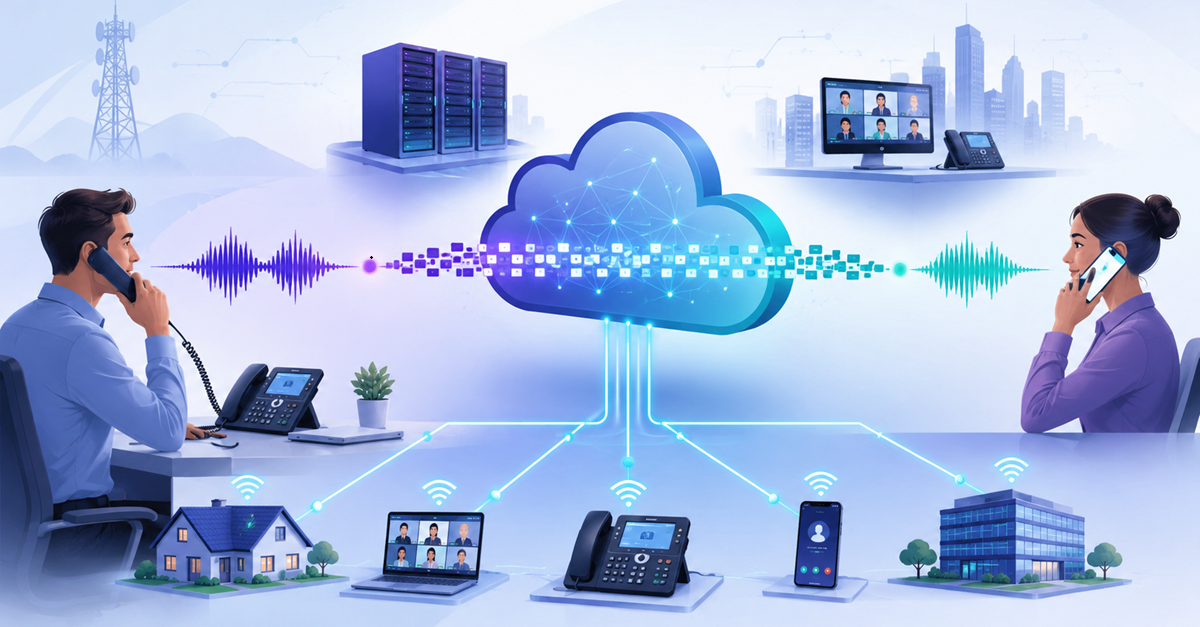
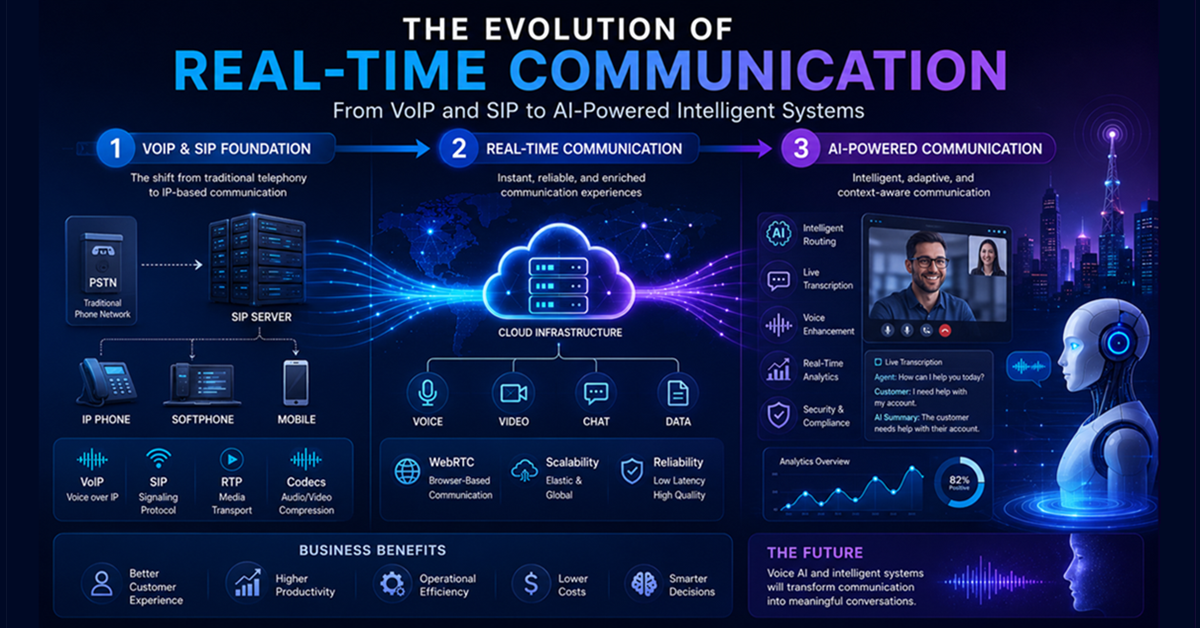
Welcome back to our limited series, Communications Then and Now. In the previous article, we explored SIP, the protocol that enables modern systems to establish and manage sessions over IP networks. SIP laid the foundation for modern real-time communication by making telecommunication systems flexible, scalable, and software-driven.
A typical workday is fast and fragmented. Notifications, meetings, and multitasking are constant. You produce content, but thinking time is often limited. This is where analog tools become useful again. Cursive writing by hand creates a different pace. It gives your brain space to process.

In recent years, embracing AI at work has shifted from a forward-thinking idea to a practical necessity across many industries. Artificial intelligence is already transforming how businesses operate and how people approach their daily tasks. Yet, despite its clear advantages, AI still carries a sense of uncertainty for many employees.

Workplaces have been transforming for years, but the rise of artificial intelligence (AI) has accelerated this evolution. While discussions about AI often revolve around job displacement, the more practical and immediate reality for most organizations is different. AI is becoming a powerful partner to human skills and intelligence.

Voice AI is transforming how humans interact with machines, evolving from basic text-to-speech (TTS) systems to sophisticated neural networks capable of expressive, human-like communication. As speech synthesis becomes more natural and accessible, industries worldwide are reimagining customer service, education, healthcare, and creative content.

In every project, the difference between a team that executes and one that struggles often comes down to something deceptively simple: follow-up. When done right, follow-up creates accountability, clarity, and progress. When done poorly, or not at all, it drains focus, undermines trust, and leaves tasks drifting in ambiguity.

Speech-to-text (STT) technology first emerged as an assistive solution, designed to help individuals with disabilities communicate and interact more easily. Over time, it evolved into a mainstream productivity tool that benefits virtually everyone. Today, capabilities such as voice dictation, real-time captioning, and automated transcription are embedded into smartphones and software platforms.

Effective communication is the backbone of every organization regardless of size or structure. While poor communication can hinder workplace productivity, structured communication models provide frameworks to understand how messages are exchanged. Choosing the right model is therefore critical for efficiency.


