Throughout this telecommunications series, we have examined how voice communication evolved from traditional telephone networks to VoIP, SIP, hosted PBX, Unified Communications, and intelligent call handling. The previous article covered intercom systems, which enable direct communication between people or locations. Paging serves a different need: delivering one announcement to a defined group, area, or building.
In our telecommunications series, we have followed the evolution of voice communication from the PSTN to modern IP-based systems. And each technology solves a different communication problem. Now, we turn to what is intercom and how it works in a VoIP environment.
From the first telephone exchanges to VoIP, cloud telephony, and today’s AI-powered services, business communications have continuously evolved toward bringing people closer together. This time, we’re looking at what Unified Communications is.
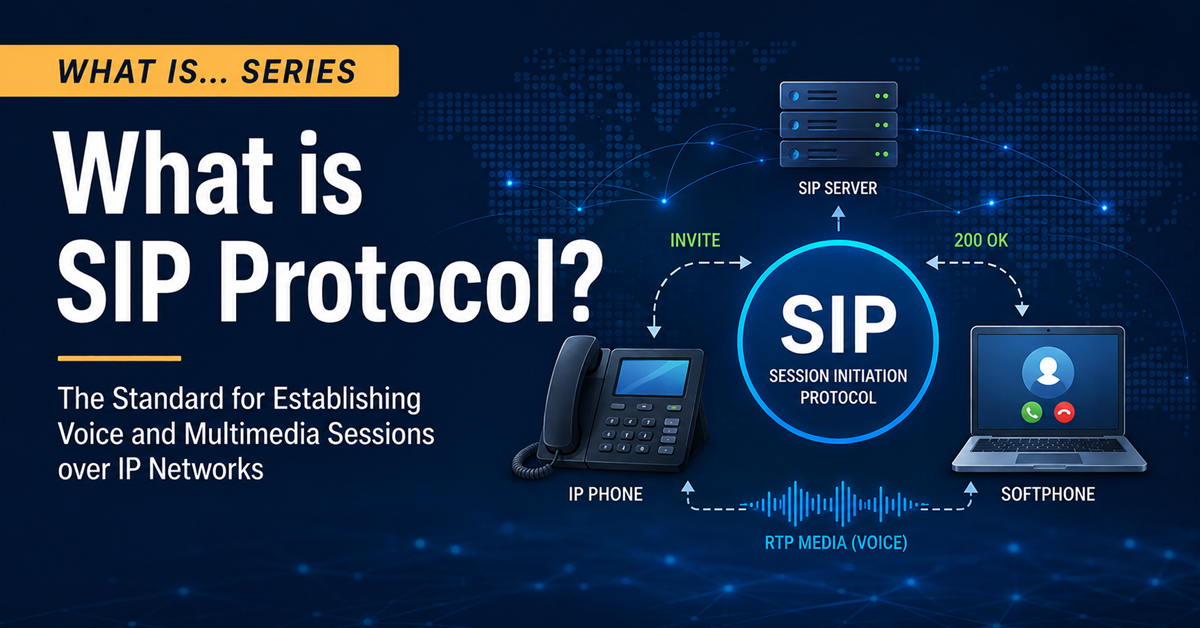
The telecommunications industry has moved through several major technological shifts. It began with the traditional telephone network, moved to VoIP, cloud communications, and now we’re in the AI-powered voice services era. This educational series follows that evolution step by step, explaining the technologies behind modern communications in plain language. In this article, we discuss the SIP protocol.
Call waiting offers a convenient way to manage incoming calls. It’s a telephony feature that allows us to be notified of another call while already engaged in a conversation. In this article, we will delve into the meaning of call waiting. Next, we explore its functionality and benefits, learn how to use it effectively, troubleshoot any issues that may arise. We then discuss the future of this technology.
Software-as-a-service (SaaS) companies create ready-made solutions for digital challenges. Instead of enterprises designing their own tools and applications, SaaS companies offer their products hosted in the cloud. A variety of models in the form of as-a-service have emerged in the past decade. One prominent example is Unified Communications as a Service, commonly referred to as UCaaS.
Business communications are getting a do-over. Moving to the cloud is not a new concept anymore. However, there’s plenty to consider. Especially when you move business communications to the cloud.
Business communications are, by all means, the living breath of any organization. They can make or break a business. Especially today. The amount of information sharing is, by all means, unprecedented. And getting ahead is, in fact, staying relevant.
Meetings are about to die. Particularly since collaborative work has become the staple of modern office life, they are about to die. And after they die, they will move somewhere better, virtual. Somewhere in the cloud, or in a special bundle of apps. But don’t get your hopes up high yet.
After all, there have been attempts to put new life into meetings. Some preach against inherent inefficacies. “Make meetings purposeful”, they say. Others are deluding themselves that theater methods will do. So “treat your meetings like an improv session”, they say. Seems like everyone thinks that “The Office” is a documentary. That we should all turn Michael Scott and do some improv.
Micro-goals are a novel concept in strategy. They allow a tactical segmentation of organizational plans. In a sense, it’s like re-creating your organization at a micro-scale.
Micro-goals are a way for your organization to learn. You use them to determine what outcomes are achievable by a small, very special, task force. Then you measure the progress of such a team and learn as much as you can.
Most small-to-medium businesses (SMB) don’t have legacy UC&C software to grapple with, making them more likely than enterprises to move to pure cloud-based UC&C services, according to data gauged by IDG Enterprise. The ratio is 20% versus 7%, respectively.
In its 2015 Unified Communications & Collaboration Survey, IDG uncovered that 33% of IT leaders plan to increase spending in Unified Communications and Collaboration (UC&C), both hosted and hybrid – a combination of hosted and on-premise services. Spending will increase by an average of 9% through 2016, while enterprises currently lavish an average of $8.1 million on UC&C products and / or services alone. In 2012, a similar survey uncovered that 49% of respondents still used on-premises solutions. That number has only slightly increased to 51% so far, but things are about to change