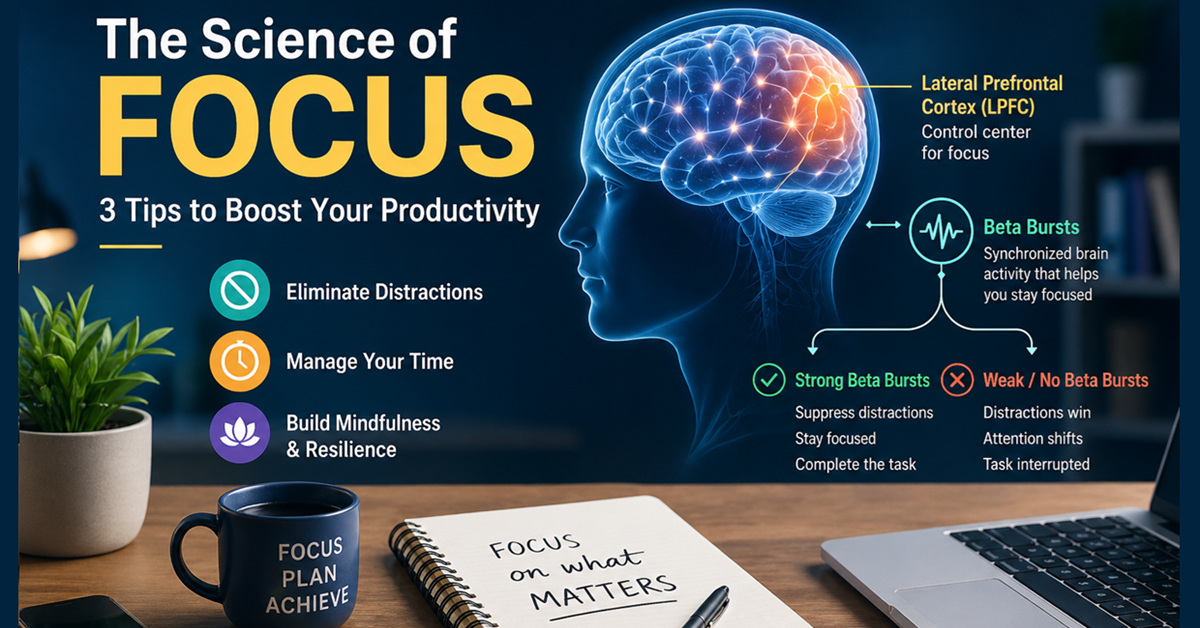
Maintaining focus can be increasingly difficult in this hyper-connected world. With constant distractions from technology, work, and personal responsibilities, finding the ability to concentrate on tasks can feel like an uphill battle.

Maintaining focus can be increasingly difficult in this hyper-connected world. With constant distractions from technology, work, and personal responsibilities, finding the ability to concentrate on tasks can feel like an uphill battle.

A typical workday is fast and fragmented. Notifications, meetings, and multitasking are constant. You produce content, but thinking time is often limited. This is where analog tools become useful again. Cursive writing by hand creates a different pace. It gives your brain space to process.

Reading was once a normal part of daily life. And for many of us, it still holds that vital place. But today, it feels harder than ever. Messages, dashboards, alerts, and short content compete for our attention nonstop. Yet reading endures as one of the most reliable ways to improve how we think and how we work.

Back-to-school season brings excitement and stress for working parents. Balancing school preparations, workloads, and family needs often strains working parents’ productivity. Juggling shopping, new schedules, and changing routines can disrupt focus and work performance.

Picture this: you’ve crafted the perfect to-do list, blocked time for deep work, and prioritized your tasks. But by 3 PM, fatigue sets in, your focus fades, and productivity stalls. What went wrong? You optimized your time but overlooked your most critical resource: energy.

When analyzing our daily routine at work, it’s easy to get caught up in the idea that the more hours we work, the more productive we are. However, research has shown that taking regular breaks can have a significant impact on our productivity, teamwork, and overall well-being.

Whether you work from home or at an office, chances are, you’ve noticed how this environment influences your job performance—for better or worse. If you feel prone to chronic stress, fatigue, procrastination, and frequent distractions, your workspace could be to blame and decluttering could be the answer.

In today’s fast-paced digital world, we are constantly bombarded with an overwhelming amount of information. Emails flood our inboxes, instant messages pop out, social media platforms lure us in with endless scrolling, and we find ourselves drowning in a sea of news articles, videos, and advertisements. This phenomenon known as information overload is silently killing our productivity.

The hybrid working environment is no longer a post-pandemic experiment. On average, office attendance is 30 percent lower than before 2020 with most remote-capable workers going into the office just 3.5 days per week. Even though most companies have had a few years to work out their hybrid plans, many still struggle to balance remote and in-office teams.

If you’ve heard of seasonal affective disorder (SAD), you might associate it with those dark, cold winter months. However, while less common, SAD can occur in the spring as well, with symptoms like restlessness, anxiety, depression, insomnia, agitation or limited attention span. Also known by its more colloquial name, spring fever, this form of SAD can pose a threat to your concentration and productivity at work.