
From switchboards and PBX systems to cloud communications and AI‑powered voice services, understanding IVR meaning helps explain how the telecommunications industry has steadily moved toward more automated and intelligent call handling.

From switchboards and PBX systems to cloud communications and AI‑powered voice services, understanding IVR meaning helps explain how the telecommunications industry has steadily moved toward more automated and intelligent call handling.
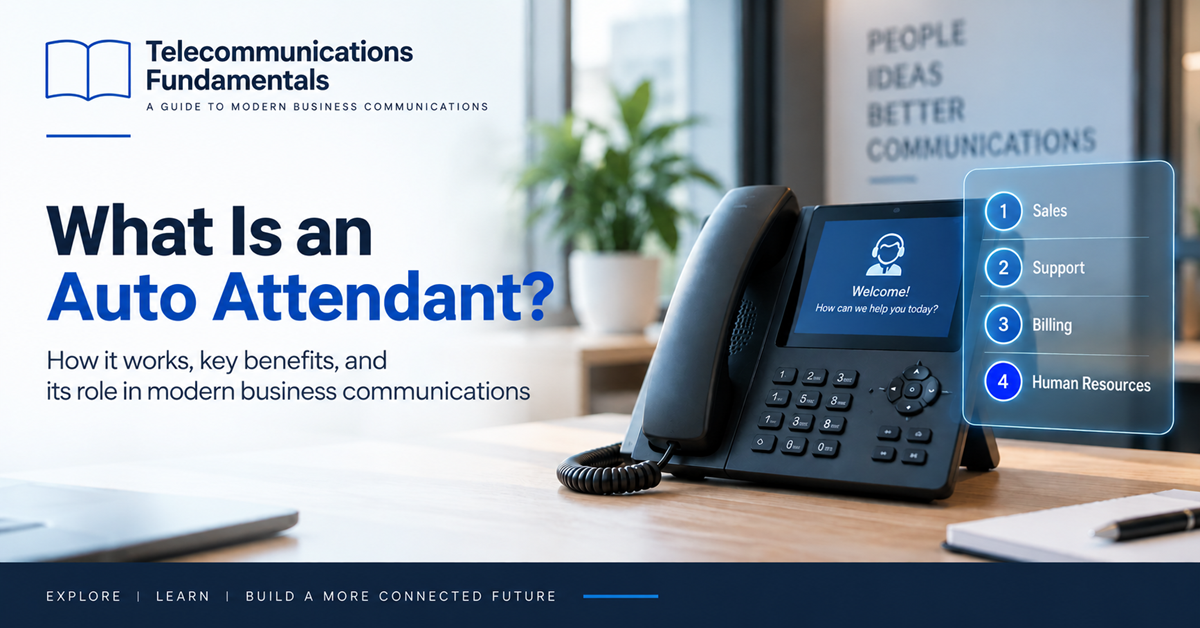
As telecommunications evolved from switchboards and traditional PBX systems to VoIP, hosted PBX, and Unified Communications, businesses gained more ways to automate calls. In this educational series, we have followed that evolution from the PSTN through cloud‑based communications. Now we move from the infrastructure behind business calling to one of the features callers interact with directly: the auto attendant.
In today’s fast-paced business landscape, customer service and seamless communication are non-negotiable. A reliable phone system is critical for connecting with clients, collaborating with teams, and scaling operations. Among the most transformative solutions there is the hosted phone system, a cloud-based phone system that redefines how businesses communicate. This guide explores its features, advantages, and limitations to help you decide if it’s the right fit for your organization.

With the rapid advancement of technology, businesses have been presented with innovative solutions to streamline their communication processes. One such solution is a cloud phone system. In this article, we will explore the pros and cons of implementing such a phone system, allowing you to make an informed decision for your business needs.

In today’s fast-paced business environment, effective communication is crucial for success. Choosing the right phone system for your business is an important decision that can significantly impact your daily operations and overall efficiency. When it comes to phone systems, two popular options to consider are hosted PBX and onsite PBX. In this article, we will explore the key differences and help you make an informed decision for your business.

The history of human communication is a fascinating journey. It started from very basic forms and progressed to sophisticated systems. We now have information at the tip of our fingers. It’s challenging to fathom the days when messenger pigeons were a means of communication. For younger generations, even the traditional landline phone is a mystery. Adorned with its sizable rotary dial, it appears like a relic from a history book. So what is a PBX phone system? And how do Unified Communications platforms enhance our professional lives today?

Voice over Internet Protocol (VoIP) lets users make phone calls over the internet. It’s an alternative to traditional phone lines and mobile. These services allow you to use your existing work phone with new VoIP configurations. Here’s how to setup VoIP for your company to harness all the advantage it offers.


Photo by lexie janney on Unsplash
Communication is one of the major challenges to tackle when you’re in the public sector doing business with partners, trying to grow a customer base, etc. Being able to take orders, answer questions, close deals and, most importantly just be there for your partners and clients in a timely manner is essential for growing a reputation as a trusty player in your field. To fulfill today’s growing demands and avoid being crushed by competitors, leaving the past behind is a good way to cement your business and assist your growth plan.
Private branch exchange (PBX) has come a long way since its inception in the early ’90s, when operators had to manage switchboards manually, using cord circuits


