
Stay focused and work will be a breeze. Yet, working from home is a challenge in its own right.
Let’s be honest, working from home is uniquely challenging. That’s because most people stash all sorts of fun things at home. Think home entertainment, from Netflix to video games. Gym equipment, kids, pets, deliveries, random visitors. There are countless opportunities for distractions.

Posts Tagged Under: remote work
Happiness at work has been a trendy topic for quite some time now. Everyone is curious, even nervous about it. From companies to scientists and employees. There is an abundance of studies and articles that draw quite a picture. Some argue that happiness at work can even make or break your business. Others find that it’s all inconclusive.
In fact, companies with happy employees score better
Coworking is a concept that’s “younger” than the average millennial professional life. Yet it also seems to be hugely popular, trendy even. Projected coworking spaces follow a curve that resembles Moore’s law. Every year, there are twice as many spots to fill. Either extensions or new spaces being open in a novel approach to build “uncorporations”. However, the concept of coworking is as old as early human communities.
After all, coworking is people doing similar work in shared spaces. Unlikely collaborators pursuing mutually advantageous strategies for development. Sharing a workspace with friends, mentors, and the competition. In a sense, this is remote work with superpowers. And it is more than a trend.


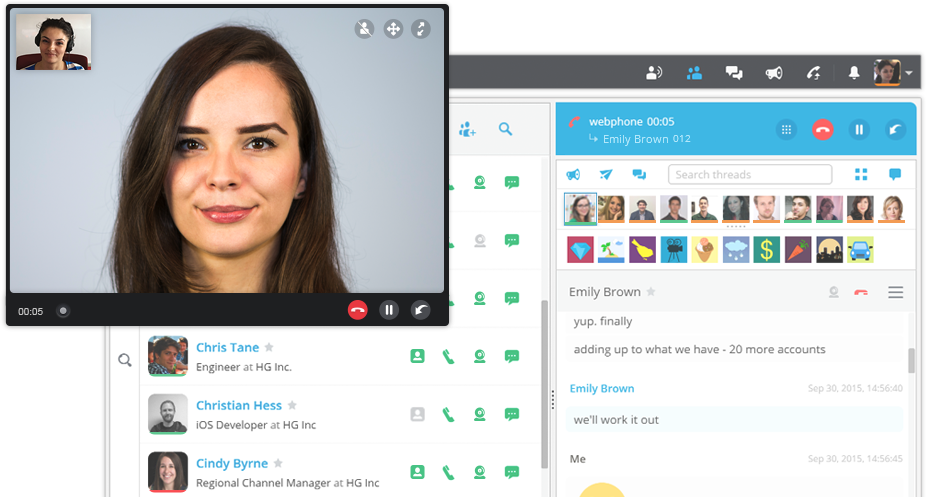
More and more companies need a toolbox to help them interact in real time with partners, clients and even remote employees.
However, running remote meetings in particular comes with its own challenges. Sometimes the participants are on different time zones. Everyone needs to be updated prior to the meeting regarding the topic of the conversation. Tasks have to be shared and everyone must have a clear understanding of the entire project. Not to mention the online meeting itself has to unfold without any technical problems.
He who never dreamed of working remotely from a beach in Bali, let him cast the first stone! But is this way of work as productive as sharing the same office? There are a lot of voices out there promoting the “death of the desk job

Remote work opportunities are on the rise, translating into benefits across the board for staffers and employers alike, according to new research. Retention and morale are first on the list of favorable aspects enabled by working remotely, followed by increased productivity, cost reductions, and access to more human resources.
A comprehensive infographic by Accountemps reveals that 68% of CFOs at large companies are beginning to see some major prequisites as a result of working both in and out of office. The firm carried out the study on 2,100 US-based CFOs at organizations big and small, with staff count ranging between 20 and 1,000.

Imagine this: two employees located in separate offices have only an hour left to meet the deadline of a critical project. Instead of settling for the outdated approach of sending countless emails back-and-forth, they leverage the company’s communications and collaboration tools, such as audio conferencing and instant messaging, to conduct a much more effective conversation and strike a business deal in time.
This is very much today’s reality, as people are simply not as attached to email as they used to be. In fact, one could argue we are witnessing the demise of the golden age of email.

Last year, Yahoo CEO Marissa Mayer made the headlines when she announced that her employees would no longer be able to work from home. Some industry pundits speculated as to whether that meant the end of remote jobs. A few months later however, Dell CEO Michael Dell announced his intention to enable half of his 14,000 workforce to work from home. At the time of his announcement, 20 percent of his team were already working from home.
So, while the jury is still out whether Yahoo fares better or not, Dell’s decision merely expanded what already proved to be a good decision: in 2012, thanks to its remote working policy, the company saved $14 million—and 6,735 metric tons of carbon dioxide emissions. It seems that offices will soon be a thing of the past, or at least will need to be re-imagined, as more and more companies are shifting to flexible working policies.


