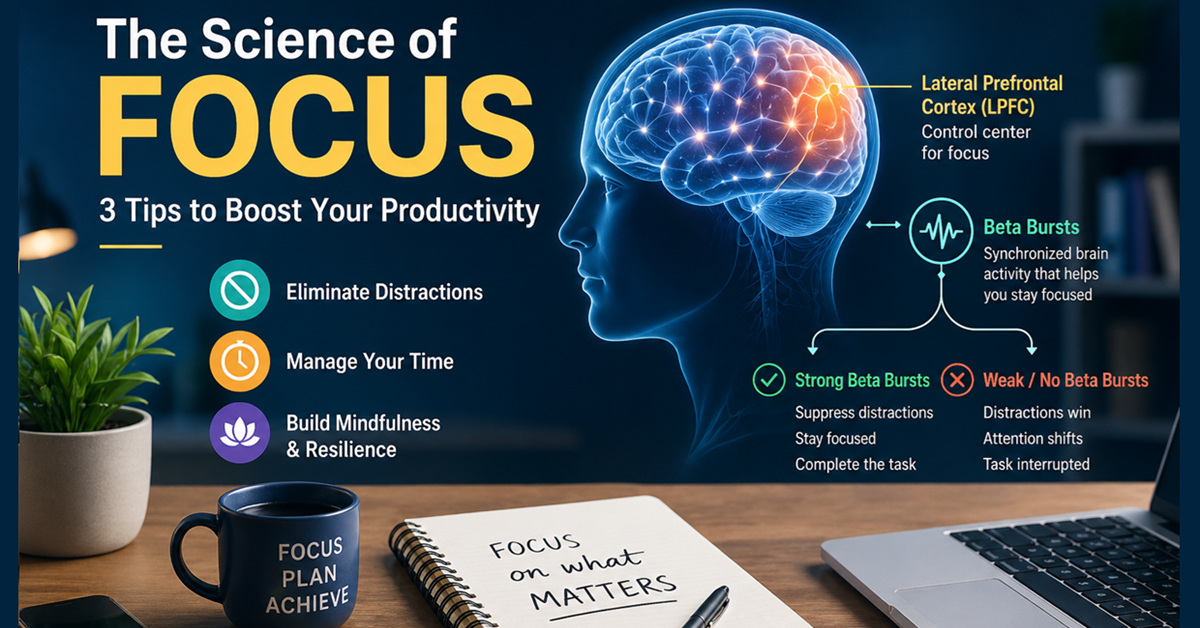
Maintaining focus can be increasingly difficult in this hyper-connected world. With constant distractions from technology, work, and personal responsibilities, finding the ability to concentrate on tasks can feel like an uphill battle.

Maintaining focus can be increasingly difficult in this hyper-connected world. With constant distractions from technology, work, and personal responsibilities, finding the ability to concentrate on tasks can feel like an uphill battle.

Call forwarding is a telecommunication feature that allows you to redirect incoming calls from one phone number to another. It is widely used by both businesses and individuals to ensure availability regardless of location or device.

A typical workday is fast and fragmented. Notifications, meetings, and multitasking are constant. You produce content, but thinking time is often limited. This is where analog tools become useful again. Cursive writing by hand creates a different pace. It gives your brain space to process.

In recent years, embracing AI at work has shifted from a forward-thinking idea to a practical necessity across many industries. Artificial intelligence is already transforming how businesses operate and how people approach their daily tasks. Yet, despite its clear advantages, AI still carries a sense of uncertainty for many employees.

Workplaces have been transforming for years, but the rise of artificial intelligence (AI) has accelerated this evolution. While discussions about AI often revolve around job displacement, the more practical and immediate reality for most organizations is different. AI is becoming a powerful partner to human skills and intelligence.

Reading was once a normal part of daily life. And for many of us, it still holds that vital place. But today, it feels harder than ever. Messages, dashboards, alerts, and short content compete for our attention nonstop. Yet reading endures as one of the most reliable ways to improve how we think and how we work.

December is here, along with its festive atmosphere, packed calendars, and year-end pressures. For many of us, it’s one of the hardest months to stay productive. Between office parties, family gatherings, shortened workweeks, and the mental load of wrapping up the year, maintaining focus can become a real challenge.

In today’s fast-paced world, productivity is essential for achieving both personal and professional success. With constant distractions and competing demands on our time, it’s easy to lose focus and feel overwhelmed. In this article, we’ll dive into the habits of highly productive people, offering practical insights and actionable strategies you can apply right away to work smarter, stay focused, and accomplish more.

In every project, the difference between a team that executes and one that struggles often comes down to something deceptively simple: follow-up. When done right, follow-up creates accountability, clarity, and progress. When done poorly, or not at all, it drains focus, undermines trust, and leaves tasks drifting in ambiguity.

Speech-to-text (STT) technology first emerged as an assistive solution, designed to help individuals with disabilities communicate and interact more easily. Over time, it evolved into a mainstream productivity tool that benefits virtually everyone. Today, capabilities such as voice dictation, real-time captioning, and automated transcription are embedded into smartphones and software platforms.