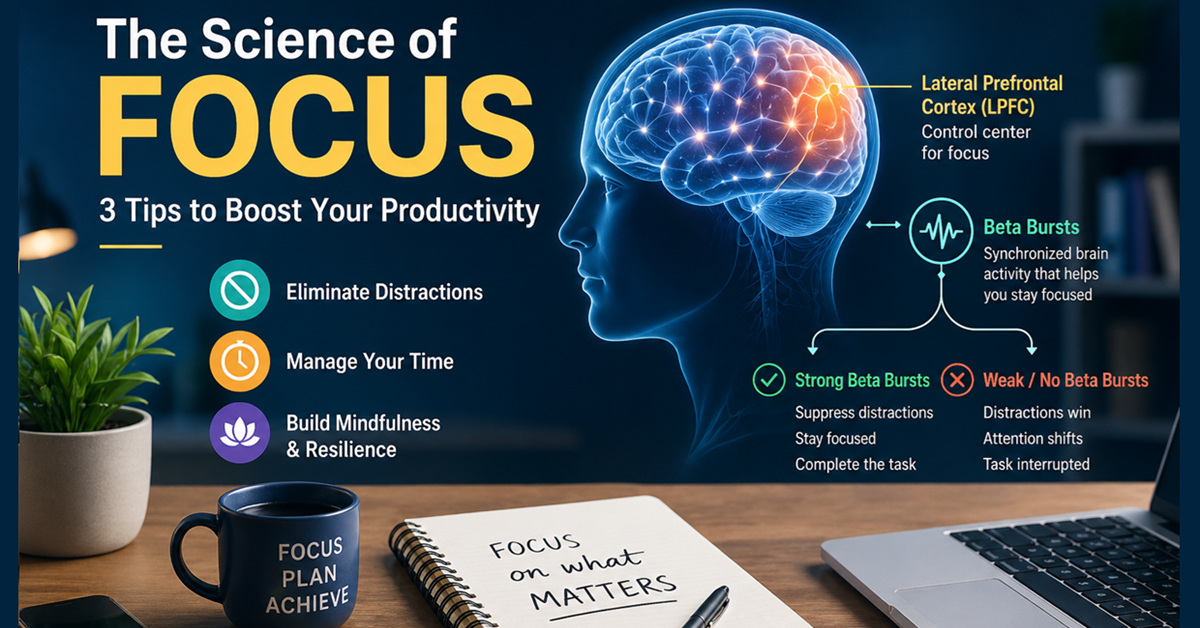
Maintaining focus can be increasingly difficult in this hyper-connected world. With constant distractions from technology, work, and personal responsibilities, finding the ability to concentrate on tasks can feel like an uphill battle.

Maintaining focus can be increasingly difficult in this hyper-connected world. With constant distractions from technology, work, and personal responsibilities, finding the ability to concentrate on tasks can feel like an uphill battle.

Reading was once a normal part of daily life. And for many of us, it still holds that vital place. But today, it feels harder than ever. Messages, dashboards, alerts, and short content compete for our attention nonstop. Yet reading endures as one of the most reliable ways to improve how we think and how we work.

It has been demonstrated that attention spans are shrinking. People are constantly inundated with short videos, bite-size content, and endless stimuli that prevent them from really focusing on one thing at a time. Even corporate training materials have moved toward digestible content. Though not necessarily a bad thing, it highlights the necessity for companies to accommodate workers who are easily distracted. Similarly, as you tailor your marketing messages for your target audience, you must also modify your communication methods to suit their attention span.

Focus is the main ingredient in productivity. Without it, you won’t be able to complete the tasks on your list in an accurate, efficient manner. As powerful as focus is, it can be hard to sustain. If you’ve noticed an ebb in your attention and concentration levels, there are ways to get back into focus and be more productive.

Consider your typical workday routine. Are you deliberately concentrating on one task, free from interruptions, or do you find yourself shifting between crucial tasks, emails, chats, and sips of coffee? For many individuals, the latter scenario is more common, and it directly mirrors the trend of shortening attention spans.

Boost productivity with breaks, it sounds counterintuitive. After all, productivity means that you are doing effective work. And no effective work happens on a break. In fact, this is a limited view on productivity.
In the past, more hours of work had a direct effect on production. More man-hours, meant more manufactured goods. The relation between time and the items produced was obvious.
Yet even then people had the right idea about productivity. Allegedly, Ford shocked the world by adopting the 40-hour workweek. And it worked! Even thought it made no sense at the time, it boosted productivity.